I Ruined Three Batches Before Mastering Homemade Salsa Canning Recipe Variations
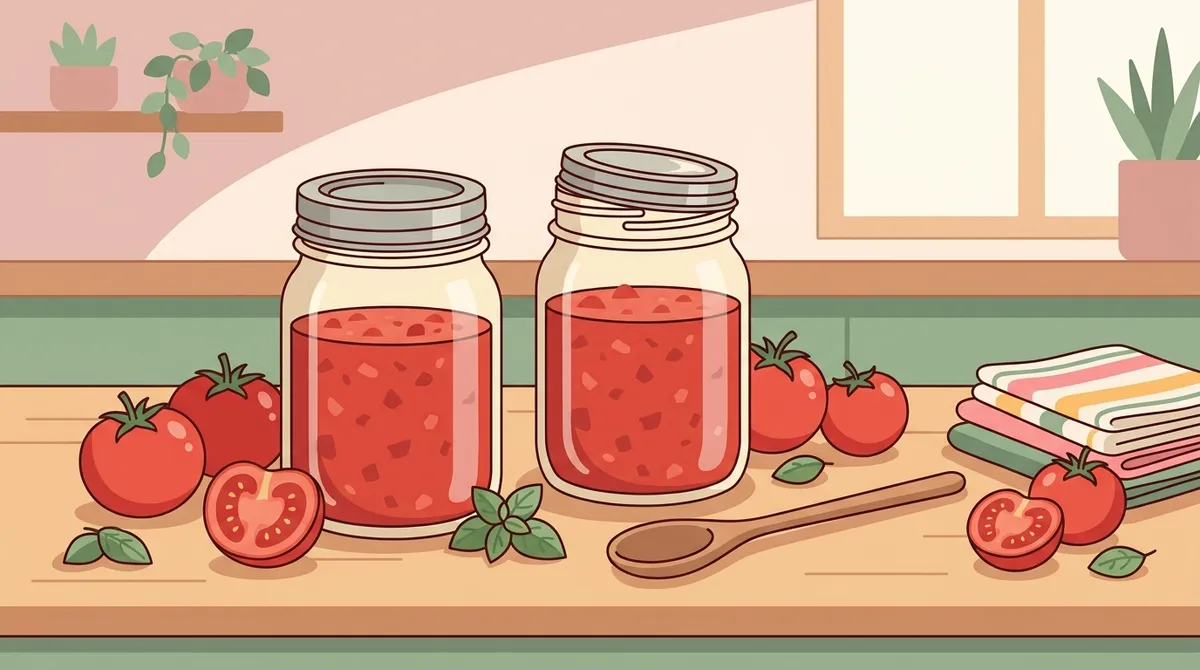
The lids were sitting flat. All twelve of them, every single jar from that batch, completely unset by the time I checked them that evening. I pressed the center of each one hoping I was wrong. I wasn’t. Twelve pints of tomato salsa, three hours of work, and none of it sealed. That was my second attempt at homemade salsa canning recipe variations, and I stood in the kitchen for probably five full minutes just staring at the counter before I put them all in the fridge and went to sit on the porch.
Ben came out and asked how it went. I said fine. He looked at me and didn’t push it, which is the right call when I look like that.
That August morning when the jar lids wouldn’t seal
What I didn’t understand yet was that I had changed too many things at once. I’d subbed in more peppers because Pepper had gotten into one of my tomato plants and I was short, I’d used a mix of roma and beefsteak instead of all roma, and I’d added extra garlic because I felt like it. None of those changes were huge on their own. Together they shifted the water content and probably the pH enough that something went wrong in the process. I still can’t tell you exactly which change caused the failure.
What I can tell you is that those jars went into the fridge and we ate salsa for two weeks straight. That part was fine. The canning part was not.
The first batch had failed earlier that summer for a different reason. I hadn’t processed them long enough. I was using a water bath canner I’d bought secondhand from a woman at the farmers market, one of those tall enamel pots, and I didn’t account for our elevation or the fact that the lid didn’t fit quite right and I was probably losing some heat. First batch, under-processed. Second batch, something with the pH or the moisture or both. I didn’t attempt a third batch until September, when I’d done more reading and was angrier about it.
How to customize salsa recipes for safe canning without losing flavor
After the second failure I sat down with the Ball Blue Book, the USDA guidelines, and about four browser tabs I’d had open for two weeks, and I tried to figure out what I could actually change and what I couldn’t. Here’s what I worked out:
- Start with a tested base recipe and identify the acid sources. The acid is what keeps canned salsa safe. In most tested recipes, that’s bottled lemon juice or white vinegar, specifically bottled because it has a standardized acidity that fresh-squeezed doesn’t. You can’t swap those out or reduce them.
- Adjust heat, not acid or tomatoes. You can change which peppers you use and roughly how many, but stay close to the total volume. Swapping jalapeños for serranos or adding a couple of chipotles is generally fine. Doubling the peppers is not, because it changes the ratio of low-acid ingredients to acid.
- Drain excess moisture from watery tomatoes. Beefsteak tomatoes have more water than romas. If you’re using them, drain chopped tomatoes in a colander for 20 to 30 minutes before mixing. This isn’t optional if you want a consistent product and reliable seals.
- Process for the right amount of time for your jar size. Half-pints process faster than pints. I had been using pint times for a batch I’d packed into half-pints, which is how I got the under-processed first batch. The Ball Complete Book of Home Preserving is clearer on this than most free resources online.
- Let jars sit undisturbed for 12 to 24 hours. I was checking mine at two hours. That’s too early. The sealing process continues as jars cool, and messing with them interrupts it.
- Test your pH if you’re making significant substitutions. pH testing strips for canning run about $10 to $15 and will tell you if you’re in a safe range. You’re looking for 4.6 or below. I bought a pack after the second failure and now I use them every single time.
- Use bottled lemon juice, not fresh — the acidity is standardized
- Drain watery tomatoes before measuring
- Check jar size against processing time every single batch
- pH strips are worth the $12
- Don’t check seals for at least 12 hours
My tomato yield was half what I expected
I had planned to can about 30 pints of salsa across the summer. I got 14. The garden gave me about half the tomatoes I’d counted on, partly because of a stretch of wet weather in July that brought in blight on two of my five plants, and partly because I’m still not great at knowing when to pick. I let a lot of them go too long on the vine waiting for them to be more red, and by the time I picked them they were starting to split or go soft.
There’s an assumption in a lot of homesteading content that you’ll have more than you need by late August and your problem will be what to do with the overflow. That has not been my experience. In three years out here, I’ve had one summer where I had a true abundance of tomatoes, and that was the year I didn’t plan to do much canning.
Why the tested recipes from USDA sometimes disappoint your family
I want to be careful here because I’m not telling you to ignore food safety guidelines. I’m not. The acid requirements exist for a reason and that reason is botulism, which is real and not something you want to learn about firsthand.
But I’ll also say this: the USDA tested recipes produce a salsa that tastes like a USDA tested recipe. It’s mild, it’s safe, it keeps. It is not the salsa my neighbor Linda brings to every potluck that makes people hover near the bowl. It’s not spicy enough for Ben, who grew up in a family that put hot sauce on everything and considers a dish “not too bad” if it makes your eyes water slightly.
What the tested recipes can’t account for is that your tomatoes taste different than my tomatoes, and both of ours taste different than the tomatoes the testers used. The sweetness varies, the acidity varies, the texture varies. Following a recipe exactly doesn’t mean the result will taste the same, it means it will be safe. Those are different things.
The workaround I’ve landed on is keeping the acid and the low-acid vegetable ratios locked in, and adjusting flavor with things that don’t carry safety risk: cumin, oregano, dried chile powders, smoked paprika. You can add more garlic within reason. You can use different kinds of peppers if the total volume stays close. You can’t just wing it on the tomatoes and vinegar and hope for the best.
Ben’s take on all of this is that I overthink it. He said once, “Just make the salsa and eat it, we don’t need to can everything.” Which is annoying because he’s also not wrong that we eat fresh salsa faster than I can make it and the canned stuff just sits in the pantry looking at me.
What worked once and then never again
In September of my second year out here, I made a batch with fire-roasted tomatoes. I ran them under the broiler until they were charred and soft, then I canned the salsa using the standard tested recipe otherwise. Every single jar sealed. The flavor was noticeably better than any other batch I’d made, smoky and a little deeper, and it held up in the jar in a way that fresh tomato versions sometimes don’t.
I tried to do the same thing the following summer. I don’t know what I did differently. The flavor wasn’t the same. It was fine, it was good, but it wasn’t whatever that first batch was. I’ve tried to reconstruct it twice now and I can’t get back there. I don’t know if it was the variety of tomato, or the specific ripeness, or whether I had them under the broiler longer that first time. I didn’t write it down in enough detail because I didn’t know yet that I’d want to replicate it.
This is why I keep a canning log now, separate from my garden journal. Every batch gets a date, the tomato variety, approximate measurements, processing time, how many jars sealed, and notes on flavor at opening. It doesn’t fix the mystery of the fire-roasted batch, but at least I won’t lose the next accidental success the same way.
The variations that save money (probably)
I grew most of what went into my better batches, so in theory the ingredient cost is low. In practice I’m counting the cost of seeds, amendments, the water bill, the fencing I had to replace after Pepper got through it and into the tomato bed, and approximately forty dollars in canning supplies over two years including the pH strips, new lids every season, and a jar lifter that I broke and replaced. I have not done the math on whether my homemade canned salsa is actually cheaper than buying salsa at the store because I think I already know what that math says.
What I get out of it that’s not about money: I know exactly what’s in it, I can make it as hot as Ben wants without paying the “this is a specialty product” markup, and there’s something real about opening a jar in February that came from the garden. That’s worth something to me even if it’s not worth something on a spreadsheet.
Batch two failed and I’m still not sure why
I went back through my notes on the second batch, the one with the flat lids, and I’ve turned it over probably a dozen times. Too much moisture from the beefsteaks. Too many peppers. Extra garlic, which shouldn’t matter but maybe. The lids were from a box I’d opened the previous year, which you’re not supposed to reuse but I wasn’t reusing them, I just wasn’t sure how old they were. Any one of those things, or all of them together.
The frustrating part is that someone at a canning demonstration at our local extension office told me that old lids are the number one cause of failed seals, more than anything people do with the recipe itself. She said it with a lot of confidence. Ben said that’s probably it, case closed. I’m less sure. The extension office is a genuinely useful resource and I recommend going to those events if your county runs them, but I couldn’t shake the feeling that the recipe changes I’d made were also a factor. Maybe she was right. Maybe it was both. I repurchased fresh lids after that and the third batch sealed fine, but I’d also made fewer changes to the recipe by that point so I can’t isolate the variable.
I keep the notes anyway. I’ve got three years of them now, mostly complaints about squash bugs and failed batches and the occasional accidental success I can’t explain. Hank was sitting on the porch railing when I finally got that third batch out of the canner, watching me through the window the way he does, completely unimpressed. All twelve jars sealed. I checked them at ten hours and then at twenty-four and they were all good. I wrote it down. I still don’t know what I did right.