I Stopped Canning Last Year—Here’s How We Ferment Vegetables for Long Term Storage Instead
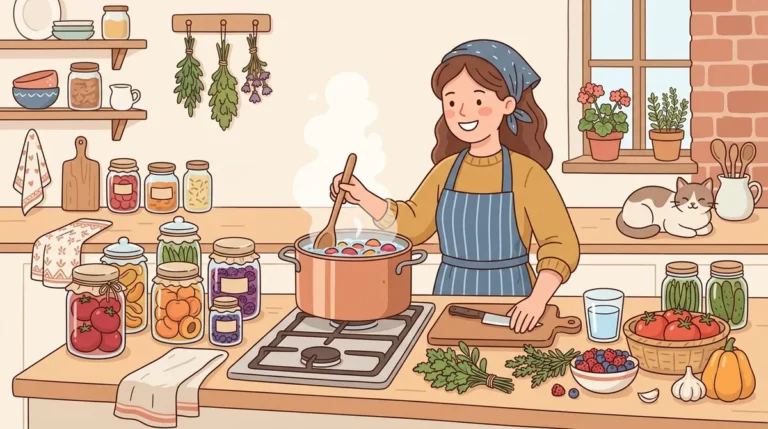
I bought a pressure canner three years ago and used it exactly twice. The second time, I accidentally turned our green beans into what Ben generously called “military rations” and I honestly called “inedible mush.” That was when I started looking into how to ferment vegetables for long term storage instead of dealing with all that canning equipment.
Ben thought I was being dramatic about the canning thing. “It’s just following directions,” he said, which is rich coming from someone who built our chicken coop without measuring anything twice. But he wasn’t wrong about fermentation being simpler. Turns out you need a lot less equipment and way less precision.
What you actually need to ferment vegetables
The whole fermentation setup cost me about thirty dollars, and most of that was buying extra mason jars. Here’s literally everything:
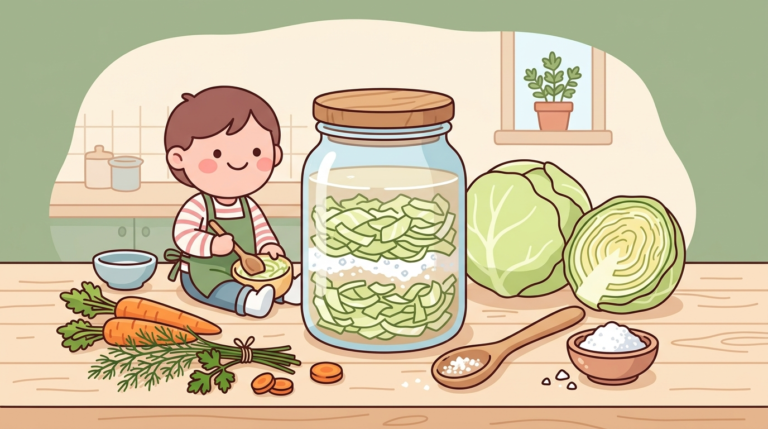
- Mason jars with tight-fitting lids (I use wide-mouth quarts)
- Sea salt or kosher salt – nothing with iodine or anti-caking agents
- Kitchen scale for measuring salt ratios
- Clean kitchen towels
- A cool, dark spot that stays between 65-75°F
That’s it. No pressure canners, no special equipment, no water baths. Ben was suspicious that something this simple could actually preserve food, but three batches later, he admits it works.
Why I quit canning in the first place
The truth is, I’m not good at following precise instructions when I’m stressed. Canning requires exact temperatures, exact timing, exact everything. Miss one step and you’ve got botulism risk or mushy vegetables. The pressure canner scared me – all that steam and those gauge readings and the constant worry about whether I’d processed things long enough.
Plus, our old farmhouse kitchen gets hot as blazes in summer when you’re running a big canner for hours. By August, I was done. The tomatoes rotted on the vine while I put off another canning session. Ben suggested we just buy a chest freezer, but our electric bill was already rough.
Fermentation doesn’t care if you’re having an off day. The vegetables do most of the work themselves.
The basic fermentation process in 6 steps
This is the method I use for almost everything – cabbage, carrots, beans, whatever’s coming out of the garden:
- Chop your vegetables into uniform pieces. Smaller pieces ferment faster, bigger pieces keep more crunch.
- Weigh the vegetables and calculate 2% of that weight in salt. For one pound of vegetables, that’s about 9 grams of salt.
- Mix vegetables and salt in a large bowl. Let sit for 10-15 minutes until they start releasing liquid.
- Pack into jars leaving about an inch of headspace. Press down so the brine covers the vegetables.
- Cover with a clean towel and leave at room temperature for 3-7 days, depending on how sour you want them.
- Taste daily and refrigerate when they hit the flavor you like.
- If vegetables aren’t covered with liquid after a few hours, add a 2% salt water solution
- Keep everything submerged – use a clean weight or smaller jar to press down
- Bubbles are good, fuzzy mold is bad
Where fermentation gets annoying
Let me contradict everything I just said about this being simple. Fermentation is finicky in ways that nobody warns you about.
Temperature matters more than I expected. Too hot and everything goes mushy and weird-tasting. Too cold and nothing happens for weeks. Our farmhouse swings between 60°F at night and 80°F during the day in fall, which means my fermentation times are completely unpredictable.
The smell is another thing. Ben claims it doesn’t bother him, but I’ve seen him open windows when I’ve got three jars going at once. It’s not bad exactly, just… very present. Like pickles mixed with gym socks. Hank seems to love it though – he sits on the kitchen counter staring at the jars like they’re the most interesting thing in the world.
And then there’s the mold situation. White mold means throw it out and start over. But sometimes what looks like mold is just kahm yeast, which is harmless but ugly. I’ve tossed perfectly good batches because I couldn’t tell the difference.
The taste thing nobody prepares you for
Here’s what’s weird about fermented vegetables – they taste completely different from what you put in the jar. I made fermented carrots expecting something like pickled carrots, but they came out tasting like… I don’t even know how to describe it. Sour and earthy and slightly fizzy.
Ben likes them better than I do. He’ll eat fermented green beans straight from the jar, which I find baffling because they taste like someone took regular green beans and made them argumentative. But they last months in the fridge, so I keep making them.
The question I can’t answer is whether this is an acquired taste I’ll develop, or if I just don’t like fermented vegetables. Three months in, I’m still not sure.
The carrots taste like they’re trying to be pickles but gave up halfway through.
Our first batch turned into vinegar
The cabbage was beautiful – tight heads from our fall garden that I was proud of. I followed the salt ratio exactly, packed it into jars, left it on the counter for what should have been five days.
Day three, it smelled like vinegar. Day five, it tasted like someone had poured white vinegar over raw cabbage. Not sour-fermented – just straight vinegar sharp. We tried eating it anyway because I hate wasting food, but it was awful.
I still don’t know what went wrong. The salt ratio was right, the temperature was fine, nothing looked moldy. Ben thinks maybe the cabbage was too old, but it seemed fresh to me. The internet has seventeen different theories but no definitive answers.
I composted the whole batch and felt like a failure for a week. Still happens sometimes with random jars.
Shelf stability claims that don’t quite hold
Technically, fermented vegetables will keep for months or even years in cool storage. The books make it sound like you can just ferment everything in September and eat from your stores all winter.
What they don’t tell you is that the vegetables keep getting more sour over time, even refrigerated. The batch of green beans I made in October tastes completely different now in January – way more sour, less crunchy, kind of tired-tasting. Still safe to eat, but not really good.
I’ve learned to make smaller batches more often rather than trying to preserve huge amounts at once. Our refrigerator space is limited anyway, and Ben was getting tired of everything tasting like pickles.
The other thing is that “long term storage” means different things to different people. My great-aunt kept fermented vegetables in her root cellar all winter, but she also grew up during the Depression and had different ideas about food safety than I do. I’m not confident enough yet to store anything outside the refrigerator for months.
So why do I keep doing this instead of going back to canning? Honestly, I’m not entirely sure. Maybe it’s because failure feels less catastrophic – if a jar goes bad, I’m out two pounds of vegetables, not a whole afternoon of work and energy costs. Maybe it’s because Ben was right about the simplicity, even with all the complications.
Or maybe I just like having something happening on my kitchen counter, even if I still can’t predict whether it’ll turn out good or strange.