I Tried Every Food Preservation Method for Winter Storage (Here’s What Actually Survived)
The smell of a root cellar in November is hard to describe to someone who hasn’t opened that door. Dirt, cold air, something slightly sweet from the apples, and underneath all of it, the faint threat of mold. After three winters of testing every food preservation method I could find—canning, freezing, dehydrating, fermenting, root cellaring, pickling—I have a pretty clear picture of what actually works for winter storage and what makes a satisfying project in October that you quietly throw away in February.
If you’re sorting through your options for preserving food for winter storage methods, most of what you’ll read online treats everything as equally valid. It isn’t. Some methods kept food beautifully from October straight through to April. Others gave us false confidence and a lot of compost.
What actually made it to April
The freezer won. I didn’t expect that going in. Fermented vegetables held up well, with some caveats. Root cellared potatoes, sweet potatoes, and onions made it through mostly intact. Water bath canned tomatoes and jams survived the full winter without issue. What didn’t make it: anything I dehydrated and didn’t vacuum seal, the apple butter I processed wrong in year one, and every single thing stored in the basement before we dealt with the moisture problem. More on that later.
The stuff that made it to April without degrading, without requiring intervention, without a single jar exploding or turning a suspicious color: frozen green beans, frozen corn cut off the cob, lacto-fermented dill pickles, sauerkraut, canned whole tomatoes, root cellared sweet potatoes, cured onions hung in the barn. That’s the honest list.
How to preserve food for winter in 7 steps (the unglamorous version)
- Audit your storage spaces before you harvest anything. Check moisture, temperature range, and pest evidence. We skipped this in year one and lost three months of work. A hygrometer costs about $12 and tells you whether a space is actually usable. Root cellars want 32–40°F and around 90% humidity for most vegetables. A basement corner with a moisture problem will not magically become a root cellar because you put vegetables in it.
- Freeze first, preserve second. Blanch vegetables before freezing—two to three minutes in boiling water, then an ice bath—or the texture degrades fast. Freeze in meal-sized portions. Vacuum sealer bags extend freezer life significantly; we use a mid-range vacuum sealer (around $80) and it’s earned its counter space. Fill your freezer before you spend time on more complicated methods.
- Use tested canning recipes only. The National Center for Home Food Preservation has free, tested recipes. Use them. Don’t adjust the acidity levels on water bath canned goods. Don’t reduce the processing time. This is the one area where improvising can actually hurt someone, so we don’t.
- Salt and time are the main ingredients in fermentation. Two percent salt by weight of your vegetables is the standard starting point for lacto-fermentation. Weight your vegetables under the brine. Keep them at 65–75°F for the first week. After that, move them somewhere cooler to slow fermentation. Mason jars with airlock lids (around $15 for a set) reduce the babysitting considerably.
- Cure your alliums and squash before storage. Onions and garlic need two to three weeks in a warm, dry, ventilated spot before they’ll store long-term. Winter squash needs a week at 80–85°F to harden the skin. Skip this and they rot early. Ben built a simple curing rack out of hardware cloth and scrap lumber that hangs in the barn—works fine.
- Keep a running inventory. Write down what you put in storage and when. Date everything. We use a whiteboard on the pantry door. Without this you end up with six half-used jars of the same thing and no idea what’s oldest.
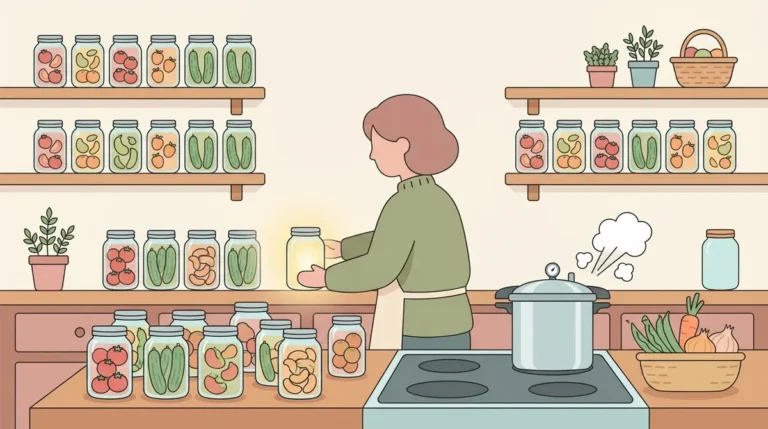
- Pressure can or freeze anything low-acid. Green beans, corn, carrots, meat—these cannot be safely water bath canned. They need a pressure canner. If you don’t have one and don’t want to buy one (a decent All American runs $200–300), freeze them. The freezer is not a lesser option. It’s just a different one.
The root cellar temperature thing we still don’t understand
Everything I read said root cellar temps need to stay between 32 and 40 degrees Fahrenheit for long-term storage. Our root cellar—which is really just the older section of our basement with a vented window—swings between 38 and 52 degrees depending on the week. Sometimes warmer in early winter before the ground really freezes. By every resource I’ve consulted, our sweet potatoes should have suffered. They didn’t. Made it to March in good shape. The carrots we bedded in damp sand were fine. I’ve mentioned this to two people who’ve been homesteading for decades and gotten two completely different explanations. I’m leaving it as an open question.
- Freezer: green beans, corn, blanched greens — all excellent
- Ferments: sauerkraut and dill pickles held through April
- Root cellar: sweet potatoes, onions, hard squash
- Water bath canning: tomatoes and jams, no losses
- What failed: dehydrated goods stored loose, anything in a damp space, improperly processed apple butter
Freezing worked better than canning—which felt wrong
Canning feels more serious. The jars look right. There’s a whole cultural weight to it. Ben’s grandmother canned everything and that’s supposed to mean something. But our green beans from the freezer tasted better in January than the canned ones. The texture held. The color was better. We ate through the frozen food first and then had to talk ourselves into the canned stuff.
Part of this is probably that canning is less forgiving of error when you’re learning. I overprocessed things in year one because I was nervous about underdoing it. Overprocessed canned vegetables taste like overprocessed canned vegetables. The USDA’s food safety guidance is built around safety minimums, not quality maximums, and there’s a difference.
The freezer is not a lesser option. It’s just a different one—and for vegetables, it often wins on taste.
I still can tomatoes because frozen tomatoes take up too much space and canned tomatoes are genuinely good. But I’ve mostly stopped water bath canning vegetables. The freezer does it better with less time invested, as long as you have the space.
The dehydrator is still running and I don’t know why
We have a mid-range food dehydrator, ten trays, runs at 125–145°F depending on what’s in it. I have used it consistently for three years. I have eaten almost nothing that came out of it. We dehydrate herbs, which we do use. We dehydrate apple slices that sit in jars and get soft and nobody touches them. Last fall I did three batches of dehydrated zucchini that I told myself I would put in soups. I have not put them in soups. Ben occasionally picks up a piece of something and eats it standing at the counter, which I think is the main use case. The machine keeps running because it feels productive during harvest season and because I keep believing I’ll develop a dehydrated food habit. I have not.
Pickling, fermentation, and the jar situation
This is the area with the widest range of results, so here’s what actually happened:
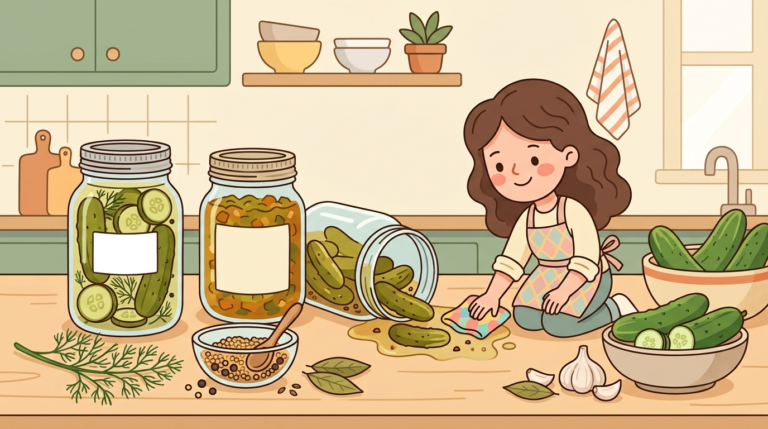
- Lacto-fermented sauerkraut: Worked every time. Green cabbage, 2% salt, packed tight, weighted down. Ready in two to four weeks. Kept in the fridge or cold storage for months without issue. This is the one ferment I would tell anyone to start with.
- Lacto-fermented dill pickles: Worked well, but texture softens after about three months. Fine for eating, not as satisfying as the crunch in August. Adding a grape leaf or oak leaf to the jar (for tannins) helps slightly. Worth doing.
- Water bath pickled cucumbers: Shelf stable through April, but honestly not as good as the fermented ones. We still make them because they store easier.
- Fermented hot sauce: One batch went wrong—smelled wrong, looked wrong, tossed it. One batch was excellent. Haven’t figured out what the difference was, which is frustrating.
- Kimchi: Made it twice. Both times good. Forgot about one jar in the back of the fridge for four months and it was fine, just very sour. Ate it anyway.
- Jar situation: We go through about 200 wide-mouth quart jars a season. Lids are single-use for canning; rings can be reused. Budget for lids every year. They’re cheap but you’ll run out.
- Dehydrated goods stored in unsealed jars — went soft and stale within weeks
- Anything stored in the basement before we fixed the moisture issue
- Apple butter I processed without adjusting for our elevation (minor but it still bothers me)
- Fermented hot sauce batch one — unknown cause, total loss
- Sweet corn canned using a water bath — this is not safe and we didn’t know that in year one
The year we lost everything in storage
Year two. We had a good garden—probably our best harvest to that point. Peppers came in heavy, tomatoes were abundant, squash took over half the kitchen garden in the way squash does. We processed a lot of it and stored it in the basement because that’s where the shelving was.
The basement flooded in late October. Not badly—a few inches during a heavy rain, gone within a day. We thought it was fine. It wasn’t fine. The moisture level in that basement spiked and stayed elevated through November. By December, the jars were okay but the cardboard boxes of root vegetables were not. The potatoes we’d cured and stored in open crates went soft, then spotted, then molded. Took everything with them—we hadn’t separated them from the winter squash, so that went too. Hank found a mouse nest in one of the cardboard boxes we’d used for onion storage. So those were gone. We threw out probably forty percent of our harvest storage that year. We did not have a redemption arc. We ate more canned goods from the grocery store that winter than we had since moving out here, and we didn’t talk about it much.
The lesson is obvious in hindsight. Pest-proof your storage containers. Fix the moisture before you store anything. We use metal trash cans with lids for root vegetables now, and we have a dehumidifier running in the basement from October through March.
Does this actually save money or just make us feel productive
Honest answer: it depends on the year, and I’m not fully sure even with the numbers in front of me. I do the bookkeeping for our household the same way I do it for clients—actual tracking, not estimates. Seed costs, canning supplies, the vacuum sealer bags, the electricity for the chest freezer running year-round. Some years the math works clearly in our favor, especially when the garden was good and we didn’t lose anything. Year two, after the basement situation, we would have been better off financially buying everything at the grocery store and not bothering.
The University of Tennessee Extension has resources on home food preservation economics if you want to run real numbers for your situation, and I’d recommend it before you invest heavily in equipment. The chest freezer cost $400 and has paid for itself in our case. The pressure canner probably hasn’t, purely on cost per jar. But I use the pressure canner for reasons that aren’t fully financial, which is its own thing to acknowledge.
What I’d actually tell someone starting out: freeze first, ferment sauerkraut because it’s almost impossible to mess up, fix your storage space before you fill it, and don’t buy a dehydrator expecting to become a person who eats dehydrated food unless you already are that person.