I Killed My First Garden—Here’s What Companion Planting Fixed
Companion planting sounds fancy, but it’s really just putting plants together that help each other out instead of making each other miserable. The best companion plants to grow together in gardens are ones that either share nutrients, keep pests away from each other, or use space efficiently. I learned this the hard way after my first garden died spectacularly.
Most of the companion planting advice you’ll find focuses on folklore and feels good but doesn’t get specific about the actual mechanics. Here’s what companion planting actually does: some plants fix nitrogen in the soil for heavy feeders, some have strong scents that confuse pests looking for their favorite crops, and some grow at different heights so they don’t compete for the same space and light.
What companion planting actually does (beyond the hype)
The science behind companion planting is simpler than the gardening blogs make it sound. Beans fix nitrogen through bacteria in their root nodules – that nitrogen becomes available to corn and squash planted nearby. Basil contains compounds that repel aphids and tomato hornworms, which is why the tomato-basil pairing actually works. Carrots and onions grow at different root depths, so they’re not fighting for the same soil nutrients.
Marigolds produce a chemical called alpha-terthienyl that kills nematodes in the soil, though it takes a full season to build up enough concentration to matter. The pest control isn’t immediate – it’s more like soil preparation for next year.
What doesn’t work is the mystical stuff about plants “liking” each other or sending good energy through their roots. Plants don’t have feelings. They either compete for resources or they don’t.
The combinations that saved my second attempt
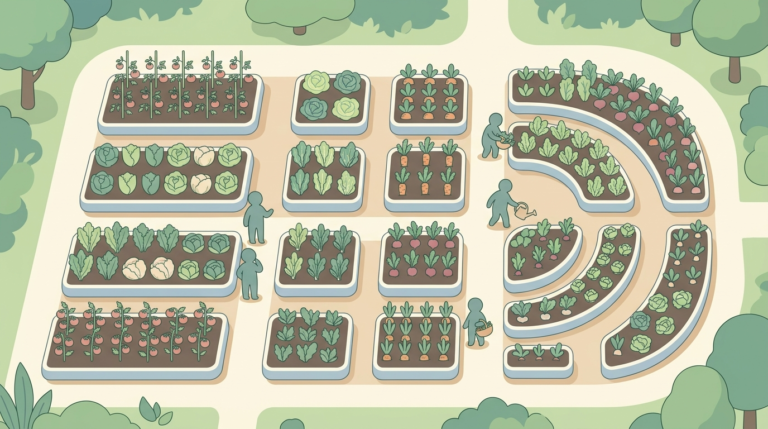
Here are the plant pairings that actually made a difference in our garden, with why they work:
- Tomatoes + basil: Basil repels aphids and spider mites. Plant basil seedlings 18 inches away from tomato plants, not right at the base. The basil also benefits from the partial shade when tomatoes get tall.
- Three Sisters (beans, corn, squash): Corn provides a trellis for beans, beans fix nitrogen for corn and squash, squash leaves shade the soil to retain moisture. Plant corn first, add beans when corn is 6 inches tall, plant squash around the edges.
- Carrots + onions: Onion scent masks carrot scent from carrot flies. Carrots grow deep, onions grow shallow, so no root competition. Alternate rows or plant onions around carrot patches.
- Lettuce + tall plants: Lettuce bolts in heat, so plant it in the shade of tomatoes, corn, or trellised peas. Extends the harvest season by several weeks.
- Marigolds throughout vegetable beds: French marigolds (Tagetes patula) kill root-knot nematodes. Plant them in spring, let them grow all season, till them under in fall. The pest control builds up over time.
Does this actually save money or just complicate things?
I’ve been tracking this for two seasons now and honestly, I’m not sure companion planting saves money. Yes, the pest control reduces some crop losses, but you’re also buying more seed varieties, spending time planning layouts, and replanting when timing doesn’t work out.
Ben thinks I’m overthinking it. He points to our neighbor who just scatters seeds in spring and somehow gets decent tomatoes every year. “Maybe good soil matters more than perfect plant combinations,” he said last month while watching me reorganize my garden map for the third time.
The seed costs add up. A pack of marigold seeds costs $3, basil is $2.50, and you need multiple varieties for companion planting to work. Compare that to just buying better soil amendments or focusing on one crop you actually eat regularly.
But then again, the three sisters plot produced more food per square foot than our monoculture rows. So maybe the ROI is there, just harder to calculate when you’re factoring in time spent planning and replanting.
When I planted everything separately and it still failed
Our first garden was a disaster that companion planting wouldn’t have saved anyway. I planted everything in separate rows like a textbook vegetable garden – tomatoes here, peppers there, herbs in their own section. The layout wasn’t the problem.
The soil was clay that stayed soggy in spring and cracked like concrete by July. I planted too early, lost everything to a late frost, replanted too late, then couldn’t keep up with watering during the August heat dome. The squash bugs ate the zucchini, something ate holes in all the pepper leaves, and the tomatoes got blight.
Even if I’d known about companion planting that first year, it wouldn’t have fixed the fundamental problems: terrible soil, wrong timing, and not understanding that plants need consistent water, not drowning followed by drought.
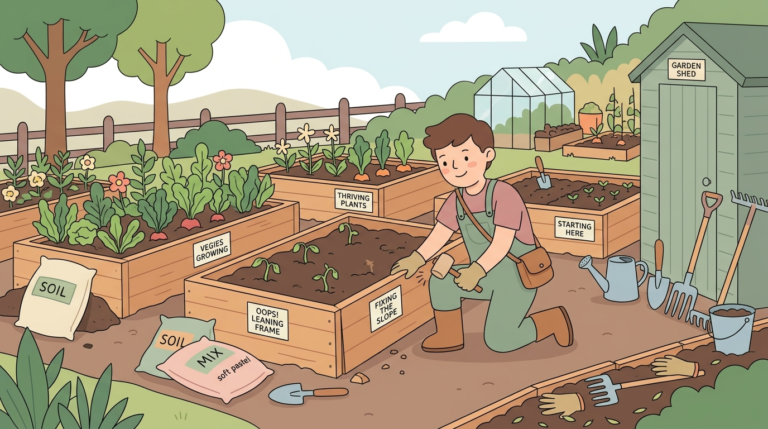
The whole thing was depressing. Ben spent weekends building raised beds while I stood there looking at dead plants, wondering if we’d made a mistake moving out here. Hank would sit on the porch railing watching me water brown tomato plants, probably thinking the same thing.
Why nobody mentions the spacing part
The companion planting charts tell you which plants go together but not how far apart to put them. This is where most people mess it up, including me initially.
- Tomatoes and basil: 18-24 inches apart, not 6 inches. Basil planted too close gets overshadowed when tomatoes bush out.
- Three sisters: Corn plants 12 inches apart, beans planted when corn is 6 inches tall, squash hills 4 feet away from corn rows. Not all crammed together.
- Carrots and onions: Alternate every other row, or plant onions 4 inches from carrot rows. Interplanting within the same row usually doesn’t work.
- Marigolds in vegetable beds: One marigold plant every 3-4 feet, not scattered randomly. They need space to establish root systems for nematode control.
- Lettuce under tall plants: Plant lettuce at the dripline of mature tomato plants, where they get morning sun and afternoon shade. Not directly at the base where roots compete.
The spacing matters because companion planting is about reducing competition, not eliminating it. Plants still need their own space for roots, air circulation, and access to light.
The problem with following someone else’s garden plan
Every companion planting guide I’ve read assumes your garden is exactly like the writer’s garden. Same soil pH, same pests, same rainfall, same growing season length. Our Tennessee clay is nothing like the sandy loam most gardening advice assumes.
The three sisters combination that works great in the Southwest doesn’t necessarily work in humid climates where fungal diseases are more of a problem than drought. Marigolds that control nematodes in California might not help with the specific pest pressure we get here.
Even within our own property, the companion planting that works in the raised beds doesn’t work the same way in the in-ground plots. Different drainage, different soil biology, different microclimates just 20 feet apart.
Ben’s approach is to try things and see what happens, adjust based on what actually grows well together on our specific piece of land. My approach is to research extensively and then second-guess everything anyway. Neither approach is obviously better.
What’s still confusing me about cilantro
Cilantro is supposed to be a good companion for tomatoes according to every chart I’ve seen. It’s also supposed to help repel aphids and spider mites. But our cilantro bolts to seed as soon as the weather hits 75 degrees, which is basically May here.
So it’s only acting as a companion plant for maybe three weeks before it turns into coriander and stops doing whatever it was supposed to be doing for the tomatoes. Is this a timing issue? Should I be succession planting cilantro every two weeks? Should I be starting with heat-tolerant varieties?
The bolting happens regardless of what it’s planted next to – tomatoes, peppers, by itself, in shade, in full sun. I’ve tried slow-bolt varieties, different planting times, more water, less water. It all bolts.
Maybe cilantro companion planting advice comes from places with longer cool seasons. Maybe it’s one of those things that works in theory but not in practice for our climate. I keep trying it anyway because I like fresh cilantro, but I’ve stopped counting on it to help with pest control.
The spreadsheet I use now (and why it feels ridiculous)
I track everything in a spreadsheet now: what’s planted where, when, with what companions, what the results were. Plant combinations, spacing, harvest dates, pest problems, weather conditions. It takes about ten minutes every weekend to update.
It feels ridiculous to track gardening in Excel, but it’s the only way I can remember what actually worked versus what I think worked. Memory is unreliable when you’re trying to compare results across seasons.
The spreadsheet is more useful than any companion planting chart because it tracks what works in this specific dirt, with these specific pests, in this specific weather.
The data shows that good soil preparation and consistent watering matter more than perfect plant combinations. But companion planting does reduce some pest pressure and increases yield per square foot when done right. It’s just not the magic bullet that gardening blogs make it sound like.
Ben thinks the spreadsheet is overkill, but he admits it’s handy when we’re planning next season and trying to remember whether the beans actually helped the corn or if that was just a good year for corn. The organization matters more than the perfect plant combinations, but I’m still figuring out which combinations work reliably enough to repeat.