
I Started Raising Rabbits for Meat—Here’s What Actually Works
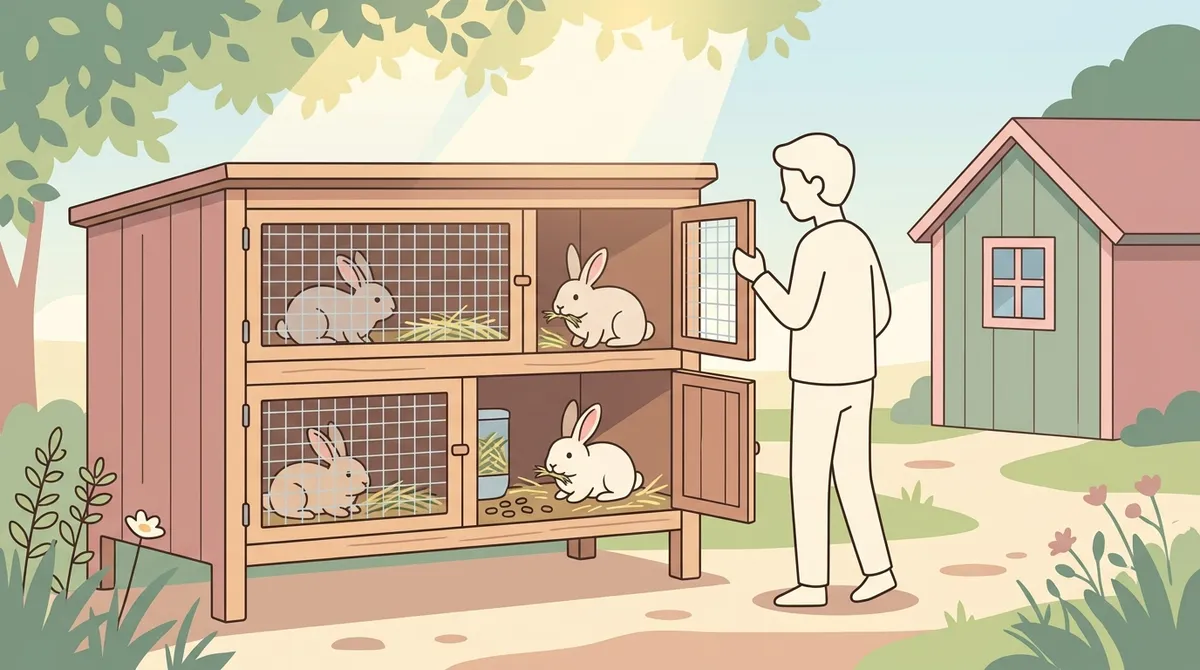
The hutch door won’t latch properly when it’s humid, which is half the year in Tennessee. I’m standing here holding it shut while three rabbits stare at me like I’m the problem. This wasn’t in any guide to raising rabbits for meat at home that I read before we started this whole thing two years ago.
Ben built these hutches from plans he found online, and they’re solid except for this one detail nobody mentions—wood swells. The rabbits don’t care about my door problems. They want their pellets.
What You Actually Need to Get Started
Skip the fancy setups you see online. Here’s what we actually use and what works:
- Hutches: We started with three 30×36 inch cages, 18 inches deep. One breeding doe per hutch. Wire bottom with resting boards—the rabbits need solid spots to sit. Cost about $80 each if you build them yourself.
- Water system: Gravity-fed water bottles, not crocks. Crocks freeze in winter and get algae in summer. Get the 32-ounce ones—rabbits drink more than you think.
- Feed storage: Metal trash cans with tight lids. Mice will get into bags. We learned this the expensive way when I found a family of field mice had moved into a 50-pound feed bag.
- Nest boxes: 12x8x8 inches, removable. Don’t leave them in year-round—does will use them as toilets between litters.
- Basic tools: Wire cutters, J-clip pliers for repairs, small shovel for cleaning. That’s it.
Total startup cost ran us about $400 for three does and basic setup. Feed costs about $25 monthly for three rabbits.
Rabbit behavior is doing more work than you think
Rabbits tell you everything if you’re paying attention, but it took me months to start noticing. A doe that’s ready to breed will rub her chin on things more—marking territory. Stressed rabbits thump at night. I used to think something was getting into the hutches until I realized they were just telling me the water was empty or a storm was coming.
Pregnant does get weird about two weeks before kindling. They’ll rearrange their hutch constantly, moving their food bowl, pushing hay around. Our doe Clover does this thing where she turns her back to you when she’s close to kindling—won’t take treats, won’t come to the front of the cage. I thought she was sick the first time.
Sick rabbits get quiet. Healthy rabbits make noise when you approach—not much, but they’ll move around, maybe grunt if they’re annoyed. A rabbit that just sits still when you walk up needs attention. Their eyes get dull before anything else shows up.
The breeding schedule nobody agrees on
I breed every eight weeks. The rabbit forums say six weeks for maximum production, ten weeks if you want to be gentle on the does. Some people rebreed the day after weaning. I tried that once and the doe refused to take care of the next litter properly.
Eight weeks gives me five litters per year per doe, which Ben says is plenty for our freezer plus some to sell. But here’s what I don’t understand—our does seem healthier on this schedule than when I tried the shorter intervals, but I can’t find anyone who explains why. The agricultural extension says six weeks is fine. The old-timer at the feed store says eight minimum.
Maybe it’s our climate, maybe it’s the breed (New Zealand Whites), maybe I’m overthinking it. But the does have been more consistent mothers since I switched to eight weeks, so I’m sticking with it even though I feel like I’m missing something obvious.
- Breed at 8 weeks post-kindling
- Gestation is 31 days
- Wean at 8 weeks old
- Process fryers at 10-12 weeks
- Gives does 1 week rest between weaning and rebreeding
How much time does this actually take?
Morning chores take fifteen minutes. Fill water bottles, check food hoppers, do a quick visual check on each rabbit. Evening is the same unless someone’s kindling or I’m cleaning hutches.
Hutch cleaning happens weekly and takes about thirty minutes for three cages. I pull out the wire floor panels and hose them down, scrape the dropping boards, add fresh bedding. It’s messier in summer when flies are bad and everything smells stronger.
Breeding day adds maybe ten minutes—take the doe to the buck’s cage, wait for the deed, return her, mark the calendar. Processing day is different. If we do it ourselves, that’s half a day for six rabbits including cleanup. If we take them to the processor, it’s a two-hour round trip.
Winter takes longer because water bottles freeze and I’m breaking ice twice daily. Summer takes longer because I’m refilling water more often and dealing with flies. Spring is easiest except when it rains for a week straight and everything gets muddy.
The year I lost eight does in spring
Three years ago, I lost eight breeding does in six weeks. All healthy rabbits, different ages, good body condition. They just started dying, one every few days. No obvious symptoms—found them dead in their hutches in the morning.
The vet said it could have been anything. Feed contamination, disease, stress, weather changes. Ran tests on two of them and found nothing definitive. The feed looked fine, smelled normal. No signs of mice or mold. Water was clean.
I replaced the entire breeding stock, switched feed brands, cleaned and disinfected everything twice. The new rabbits have been fine for three years now. But I never figured out what happened, and it still bothers me. Eight good does, just gone.
Ben thinks it was something in the spring rain that year—we had unusual flooding, maybe runoff contaminated something. I think it was bad feed, but I’ll never know. The whole thing cost us about $300 in replacement stock and six months of no meat production.
Processing at home versus outsourcing
We tried both. Processing ourselves costs nothing except time and some mess in the garage. Taking them to the processor costs $4 per rabbit plus gas for the drive.
Doing it yourself means learning to dispatch, skin, and clean rabbits properly. It’s not difficult technically, but it’s not pleasant either. Takes about twenty minutes per rabbit once you get efficient. Ben handles the dispatching, I do the cleaning.
The processor does cleaner work and vacuum-packages everything nicely. But they only take rabbits on certain days, and you have to plan around their schedule. Sometimes that means keeping fryers an extra week past optimal weight.
Here’s what nobody tells you—processing gets harder emotionally, not easier, the more you do it. I thought I’d get used to it, but after three years I still don’t like it. The processor removes that stress, but it also removes some control over timing and quality.
We’re doing about half and half now. Process the best ones ourselves for special meals, send the rest out for everyday eating. It’s not the most economical approach, but it works for our sanity.
Does this feed your family like you wanted?
Three does produce about 60 fryers per year if everything goes well. That’s roughly 150 pounds of meat, or about three pounds per week. Enough for one rabbit meal weekly for our household, with some extra for special occasions.
Cost per pound runs us about $4 including feed, processing, and replacement stock. Grocery store rabbit is $8-12 per pound when you can find it, so we’re saving money. But store-bought chicken is $2 per pound, so if you’re just looking at economics, chickens make more sense.
The meat is different—leaner than chicken, mild flavor, cooks fast. We use it like chicken in most recipes. Kids complain it’s “too healthy” compared to chicken thighs, which is probably accurate.
Was it worth starting? Probably. The rabbits are less work than the chickens, take up less space, and Hank likes sitting on the hutch roofs in the afternoon sun. But don’t expect it to revolutionize your grocery bill or solve food security. It’s just another thing we do out here that works okay most of the time.