The Tiny Plot That Feeds My Family For a Year (And How I Did It)
Everyone told me you needed acres and acres to grow enough food for a family. The homesteading books made it sound like you’d need half your property in production, minimum. So when we were planning our garden the first spring, I sketched out elaborate plots covering most of our cleared land. Ben took one look at my drawings and said, “That’s going to be a lot of weeding.” Turns out, learning how to grow a year of food on less than a quarter acre wasn’t about having more space – it was about using the space we had completely differently.
Three years later, our quarter-acre plot feeds us vegetables, herbs, and enough surplus to trade with neighbors. Not because we’re particularly gifted gardeners – we’re definitely not – but because we stumbled into some methods that pack a serious amount of food into a small space.
How to Grow a Year’s Worth of Food on Less Than a Quarter Acre
The secret isn’t magic varieties or expensive equipment. It’s density and timing. Most people plant their gardens like suburban lawns – everything spaced out with paths you could drive a truck through. We learned to think more like a forest.
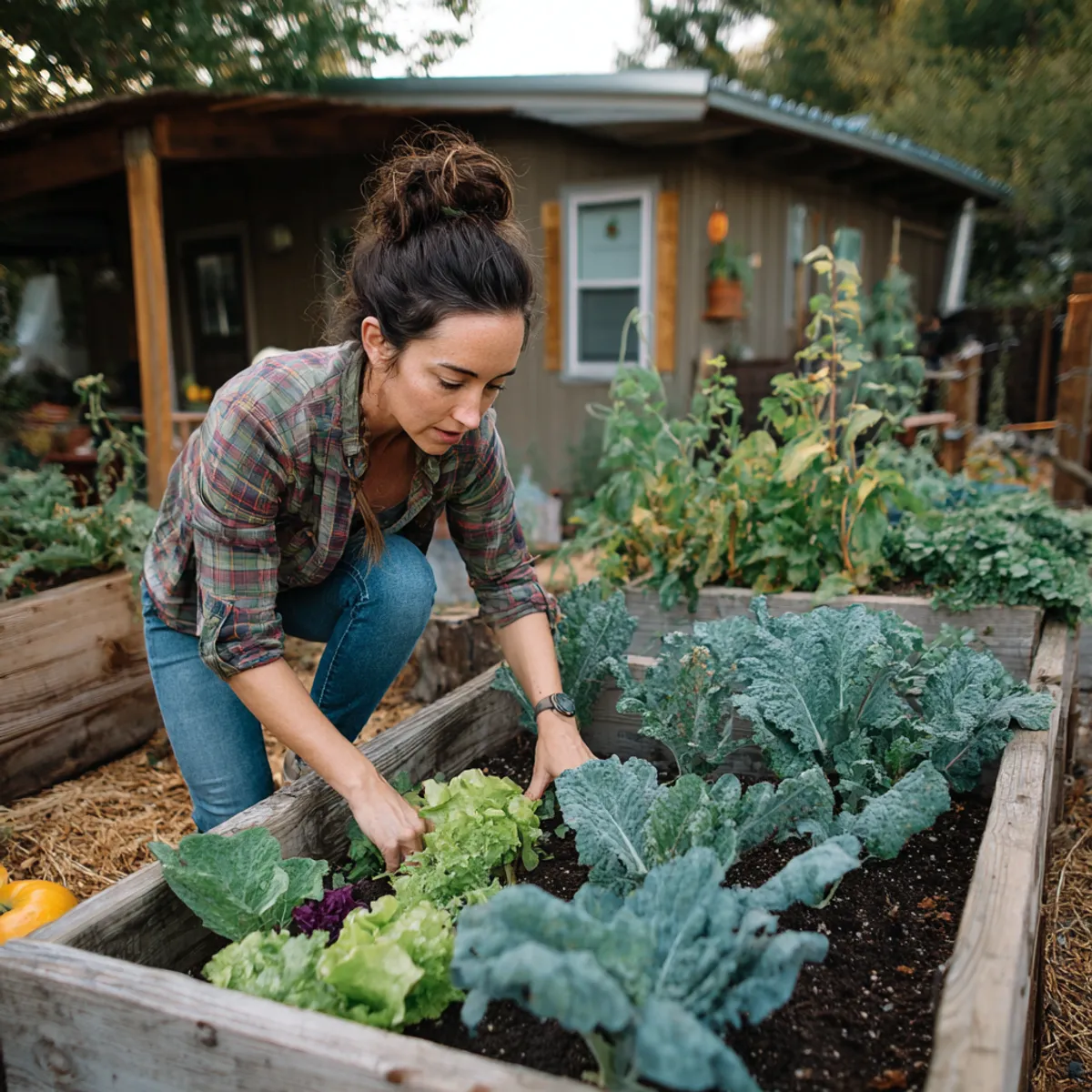
First, forget traditional rows. We use intensive planting in 4-foot-wide beds with everything planted at the minimum spacing the seed packet allows. Sometimes closer. Our lettuce grows elbow-to-elbow, carrots get thinned but the thinnings go straight into salads, and we interplant fast crops between slow ones.
Second, plant vertically. Pole beans climb our fence posts, cucumbers scramble up cattle panels, and we’ve got three levels of crops in the same footprint. Even our winter squash grows up a trellis now instead of sprawling across half the garden.
Third, succession plant everything. We seed lettuce every two weeks from March through October. Bush beans get planted four times a season. Radishes fill any empty spot for 30 days. Ben calls it “garden Tetris” but it works.
- Build beds 4 feet wide maximum so you can reach the center from either side
- Use cattle panels as vertical growing supports – they’re sturdy and last for years
- Plant quick crops like radishes and lettuce in any gap larger than 6 inches
- Keep succession planting notes in your phone – set reminders to plant every 2 weeks
The Part Nobody Talks About
Small-scale intensive gardening means you’re basically running a tiny farm. Every square foot matters, which sounds efficient until you realize that every square foot also needs attention. Daily attention.
The weeding alone nearly broke me that second summer. When everything’s planted densely, the weeds grow densely too. You can’t just run a hoe down a row – you’re hand-weeding between plants that are six inches apart. I spent entire mornings on my hands and knees in our 30-by-30 plot, and Ben would find me there looking defeated.
“Maybe we should just buy more vegetables,” he suggested one particularly bad July morning when the crabgrass had taken over half the lettuce bed overnight. But by then we were in too deep to quit.
3 Space-Saving Crops That Saved My Harvest
After trying dozens of varieties, three crops became the backbone of our food production:
1. Pole beans instead of bush beans. Bush beans take up the same ground space but give you maybe 3-4 picks. Pole beans climb an 8-foot trellis and produce for 10-12 weeks straight. We grow Cherokee Trail of Tears beans now – they work as fresh snap beans early in the season, then shell beans later, then dry beans for winter storage. Three crops in one footprint.
2. Cut-and-come-again lettuce and greens. Forget head lettuce that gives you one harvest then you replant. We grow loose-leaf varieties and Asian greens that regrow after cutting. One planting of Red Sails lettuce keeps producing for 8-10 weeks if you just cut the outer leaves. Pac choi works the same way.
3. Winter squash on vertical supports. This was Ben’s idea and I thought he was crazy. Butternut squash vines want to sprawl 15 feet in every direction, but he built them a cattle panel trellis and they climbed it happily. We harvest 20-30 squash from a 4-by-8 footprint now instead of letting them take over a quarter of the garden.
Why 4pm Nearly Broke Us
The irrigation system we installed that first year was a disaster. Not the equipment – the timing. We set everything to water at 4pm because that’s when we got home from our regular jobs and could check on things.
Turns out watering in the late afternoon is basically an invitation for every fungal disease in Tennessee. Our tomatoes got early blight so bad they looked like someone had taken a blowtorch to them. The cucumbers developed powdery mildew that spread faster than I could pull infected leaves. Even the beans started showing rust spots.
Ben kept adjusting the timer – maybe 3pm would be better? Maybe 5pm? – while I researched organic fungicides and spent our seed money on copper spray. We were treating symptoms while creating the perfect conditions for the problem every single day.
Finally, our neighbor Jim stopped by during one of my frantic spraying sessions. He watched me for about two minutes then said, “You know you’re watering at the worst possible time, right?” Early morning watering lets the leaves dry before evening humidity sets in. We switched to 6am and most of our disease problems disappeared within two weeks.
What I Kept Getting Wrong (And How I Fixed It)
I spent the first year treating our quarter-acre like a big container garden – buying expensive organic potting mix and amendments, trying to create perfect soil before planting anything. Ben kept suggesting we just “throw some seeds in the dirt and see what happens,” which seemed completely backwards to my careful planning.
The expensive soil worked great for about six weeks, then everything started looking pale and stunted. Turns out, purchased soil amendments give you a quick boost but don’t create the long-term soil ecosystem you need for intensive production.
Year two, I gave in and tried Ben’s approach – plant first, improve as you go. We seeded cover crops between plantings, added compost whenever we had it, and let the roots of all those densely planted vegetables break up the clay subsoil. The garden looked messier but produced more.
Now I realize that perfect soil is something you grow, not something you buy. Our beds that have had three years of intensive planting and regular compost additions produce twice as much as the spots where I tried to build perfect soil before planting.
The Unexpected Benefit That Kept Us Going
The best part of growing this much food in such a small space wasn’t the harvest – it was discovering what we actually eat. When you’re planning to grow a year’s worth of vegetables, you start paying attention to what disappears from your kitchen and what sits in the crisper drawer until it goes bad.
Turns out we eat a lot more onions and garlic than I realized, and a lot less kale than I wanted to believe. We go through pounds of potatoes every week but barely touched the eggplant. Ben loves green beans but won’t eat lima beans no matter how I cook them.
This sounds obvious, but most garden planning advice tells you to grow “a variety” without considering whether you’ll actually eat the variety you grow. Now our garden is heavily weighted toward the stuff we actually consume, and we trade our surplus beans and tomatoes for things like apples and grains that we can’t grow ourselves.
The Tiny Tweak That Doubled My Harvest
The change that made the biggest difference happened by accident. Hank knocked over a flat of lettuce seedlings in early May, scattering soil and plants across three different beds. Instead of replanting them in neat rows, I just stuck them wherever there was an empty spot.
Those scattered lettuce plants grew better than anything I’d carefully spaced and planned. They were tucked between tomato plants, growing in the partial shade of bean poles, filling the gaps around pepper plants. Not only did they produce more, they also lasted longer into the hot summer because they weren’t getting full sun all day.
Now we intentionally plant quick crops as living mulch around our main vegetables. Lettuce grows at the base of tomato plants. Radishes fill the spaces between slow-germinating carrots. Herbs get tucked wherever there’s room. Everything grows better when it has neighbors, and we’re harvesting food from space that used to be just empty dirt between plants.
The whole quarter-acre feels more like a managed ecosystem now than a traditional garden. More work to maintain, but way more productive than anything I planned on paper that first spring.